
What Is a Moroccan Bath — And Why Dubai Women Are Making It a Monthly Ritual
A Moroccan bath is one of the few beauty rituals that deep-cleans, exfoliates, detoxifies, and hydrates the skin in a single session. Here’s what actually happens during one — and why it makes particular sense in Dubai.
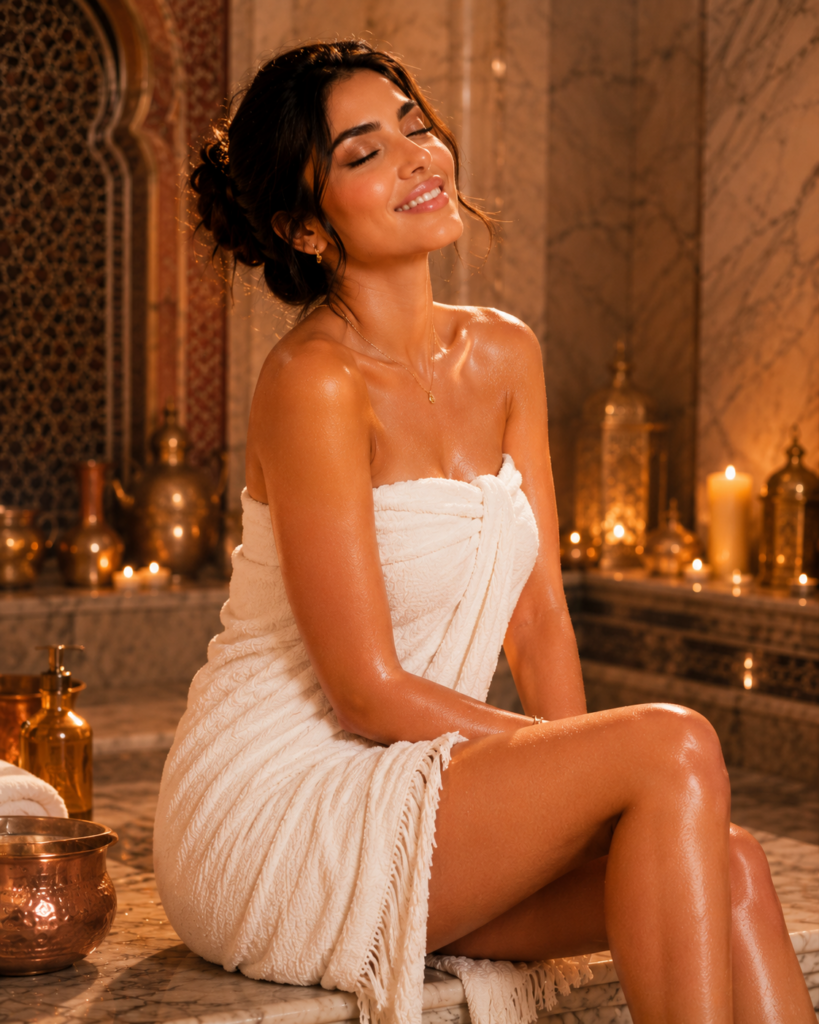
She Didn’t Expect Her Skin to Feel Like That
She’d booked it out of curiosity.
A friend had mentioned it twice in the same week. Something about leaving feeling like she’d shed an entire layer of herself — in the best possible way. It sounded slightly dramatic.
It wasn’t.
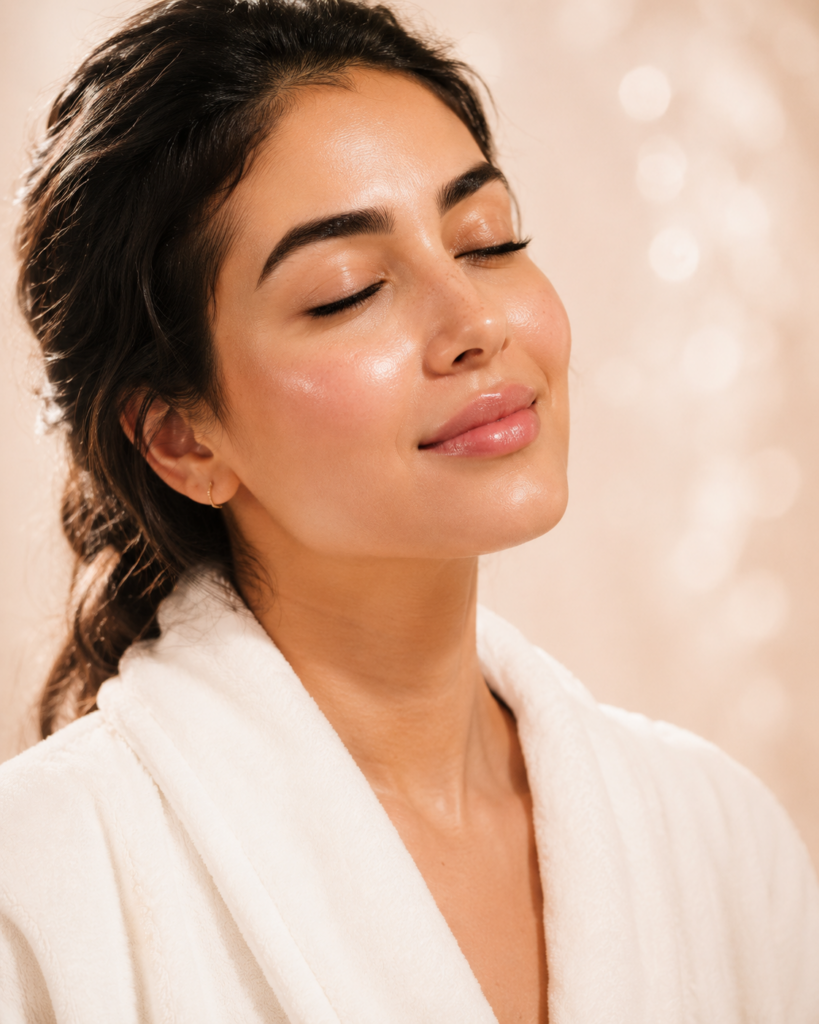
She stepped out of the session and touched her arm. Then she touched it again. The skin felt different in a way that’s difficult to describe accurately — not just soft, not just smooth, but genuinely new. Like the surface of her skin had been returned to an earlier version of itself.
That’s the Moroccan bath. And it’s the reason women who try it once tend to come back every month.
This article explains what it actually is, what happens to your skin during one, and why Dubai specifically is a place where this ritual earns its place in a regular routine — not as a luxury, but as maintenance.
What a Moroccan Bath Actually Is
A Moroccan bath — called a hammam in Arabic — is a traditional full-body cleansing ritual rooted in North African and Islamic bathing culture. The word hammam comes from the Arabic root meaning “to heat” or “warm spreader.”
It’s been practiced for over a thousand years. That’s not a marketing claim. It’s cultural history — the hammam has been a cornerstone of wellness, hygiene, and social life across Morocco and the wider Arab world for centuries.
What makes it different from a steam room, a regular body treatment, or any other spa service is the specific sequence of steps and the specific products used at each stage. It’s not one thing — it’s four distinct processes working together.
Step 1 — Steam. The body is exposed to warm, moist steam that opens the pores, softens the skin, and begins to loosen the layer of dead cells on the surface. Unlike a dry sauna, the moist heat of the hammam hydrates the skin while it opens it — rather than drying it out.
Step 2 — Black soap (Savon Beldi). A traditional Moroccan soap made from olive oil and macerated olive paste. Rich in Vitamin E and oleic acid. Applied generously over the entire body and left to penetrate for several minutes. It softens the dead skin layer further, making the exfoliation that follows more thorough and more effective.
Step 3 — Kessa exfoliation. A rough-textured mitt called a kessa is used to work systematically over every part of the body. The dead skin rolls off in visible layers. This is the part most women describe as transformative — seeing the literal accumulation of dead skin leave the body.
Step 4 — Ghassoul clay and argan oil. A mineral-rich clay mask — ghassoul — sourced from the Atlas Mountains of Morocco, is applied over the skin. It draws out impurities while nourishing. Finished with an argan oil massage that seals moisture into freshly exposed skin and leaves the surface visibly luminous.
The whole session takes approximately 45 to 60 minutes. The result lasts, visibly and physically, for days.
What’s Actually Happening to Your Skin
The sensory experience is significant. But the physiological effect is what makes this a genuine skin treatment rather than just a pleasant ritual.
A 2025 peer-reviewed cross-sectional study published by the Department of Dermatology at Mohammed VI University Hospital examined exactly what the Moroccan hammam does to the skin — its benefits, its effects, and the conditions under which it produces the best results. The study confirmed the hammam’s established benefits for skin purification: the heat and humidity open the pores, facilitating the elimination of impurities and preparing the skin for the deep exfoliation that follows.
Here’s what each stage does at a cellular level:
The steam phase triggers perspiration — the body’s own mechanism for clearing the pores from the inside. The moist heat at 40-50°C increases blood circulation and begins vasodilation — the widening of blood vessels that improves delivery of oxygen and nutrients to skin cells. Unlike dry heat, the humid environment maintains the skin’s moisture barrier throughout this process rather than dehydrating it.
The black soap phase works because of its oleic acid content. Oleic acid is a fatty acid that’s structurally similar to the skin’s own natural sebum — it penetrates the top layers of the skin rather than sitting on the surface, softening the bonds between dead cells and making the exfoliation that follows more complete.
The kessa exfoliation phase removes the stratum corneum — the outermost layer of dead skin cells that accumulates continuously. Removing this layer signals the skin to accelerate cell turnover — the production of new, healthy cells to replace what’s been removed. The result is improved skin texture, better light reflection (the source of the “glow” women describe), and — over time — improved skin elasticity.
The ghassoul clay phase works through adsorption — the clay’s mineral structure draws impurities and excess oil to its surface as it sits on the skin. Ghassoul specifically contains higher levels of silica, magnesium, and potassium than most other clays, making it particularly effective for absorption without stripping.
The argan oil finish seals everything. Freshly exfoliated skin absorbs oils more effectively than skin with a layer of dead cells on top. The argan oil applied at this stage penetrates more deeply than it would in normal circumstances — which is why the moisturization effect of a hammam outlasts what any daily moisturizer produces on its own.
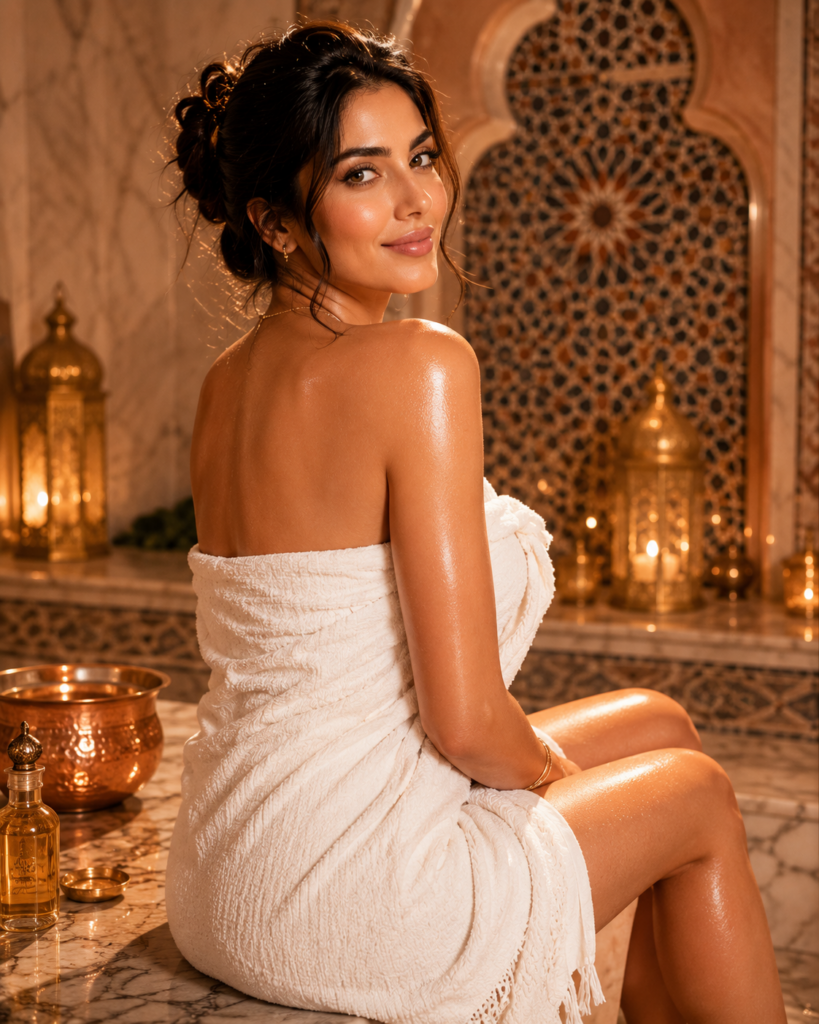
Why This Matters Specifically in Dubai
Most skin treatments are relevant anywhere. This one is particularly relevant here — and the reasons are specific to Dubai’s environment.
Hard water. Dubai’s tap water contains high concentrations of calcium and magnesium minerals. Every shower deposits these minerals on the skin. Over time they accumulate, dull the skin’s surface, and interfere with the skin’s natural hydration. The deep exfoliation of a hammam removes this mineral buildup more thoroughly than any cleanser or scrub used in a normal shower.
UV exposure. Dubai’s sun is intense year-round. UV exposure is the primary driver of dead skin cell accumulation, uneven texture, and surface pigmentation. The skin naturally produces more dead cells as a protective response to UV — which means the buildup accumulates faster here than in lower-UV environments. A monthly hammam keeps this accumulation managed so the skin’s surface stays clear and responsive.
Air conditioning. The constant shift between outdoor heat and air-conditioned interiors creates a cycle of moisture loss and reabsorption that stresses the skin barrier continuously. The hydration delivered during a hammam — particularly the argan oil finish — restores what this cycle removes and supports the barrier rather than simply coating the surface.
The pace of Dubai life. This isn’t a physical reason — but it’s real. The hammam produces a measurable reduction in cortisol. The heat, the rhythm of the treatment, the parasympathetic nervous system activation that warm steam triggers — all of it produces a calm that isn’t just pleasant but physiologically distinct from ordinary relaxation. In a city that runs at the pace Dubai runs at, that kind of reset has value that goes beyond the skin.
Who a Moroccan Bath Is Right For
Most women. But it earns its place most specifically for:
Women who feel like their skin has stopped responding. Products that used to work don’t seem to anymore. The moisturizer sits on top rather than absorbing. Nothing looks quite as fresh as it should. This is almost always a buildup issue. A hammam strips it back to the baseline and makes everything else work again.
Women dealing with dullness or uneven texture. Both are surface issues — dead skin accumulation, mineral deposits from hard water, or a combination of both. The kessa exfoliation addresses both simultaneously. Women who’ve been chasing glow with serums and masks often find the hammam achieves more in 45 minutes than months of topical products.
Women preparing for a significant event. A hammam done three to five days before a wedding, a shoot, or an important occasion produces skin that looks genuinely different in photographs. The combination of deep exfoliation and argan oil creates a quality of light reflection that doesn’t come from makeup — it comes from the skin itself.
Women who want a treatment that addresses the whole body, not just the face. Most professional skin treatments focus on the face. The hammam addresses the entire body at the same level of care — arms, legs, back, décolletage, everything. For women who want their skin to feel consistently good, not just their face, this is the service that delivers that.
Women new to Dubai. The skin often behaves differently here than it did at home. Hard water, different UV levels, different humidity — the skin needs time to adjust and support to do so without deteriorating. A monthly hammam in the first few months of living in Dubai provides the kind of thorough reset the skin needs to find its equilibrium in a new environment.
Related: The Real Difference Between a Luxury Facial and a Regular One
The Moroccan Bath vs. a Regular Body Scrub
Most women have tried a body scrub — either at home or as part of a spa treatment. The comparison is worth making clearly.
A regular body scrub — even a professional one — works only at the very surface of the skin. The exfoliant removes the top layer of dead cells mechanically. That’s useful and produces a noticeable result.
The hammam works differently at every stage. The steam pre-treats the skin before any exfoliation happens. The black soap softens the deeper layers of dead cell buildup rather than just removing the surface. The kessa exfoliation is more thorough and more complete than scrub application because the skin has been properly prepared for it. And the ghassoul clay and argan oil finish provides functional skin treatment — mineral absorption, barrier support, and deep hydration — rather than just fragrance and surface feel.
The result isn’t just cleaner skin. It’s skin that has been functionally reset — at a level that a surface scrub, however good, doesn’t reach.
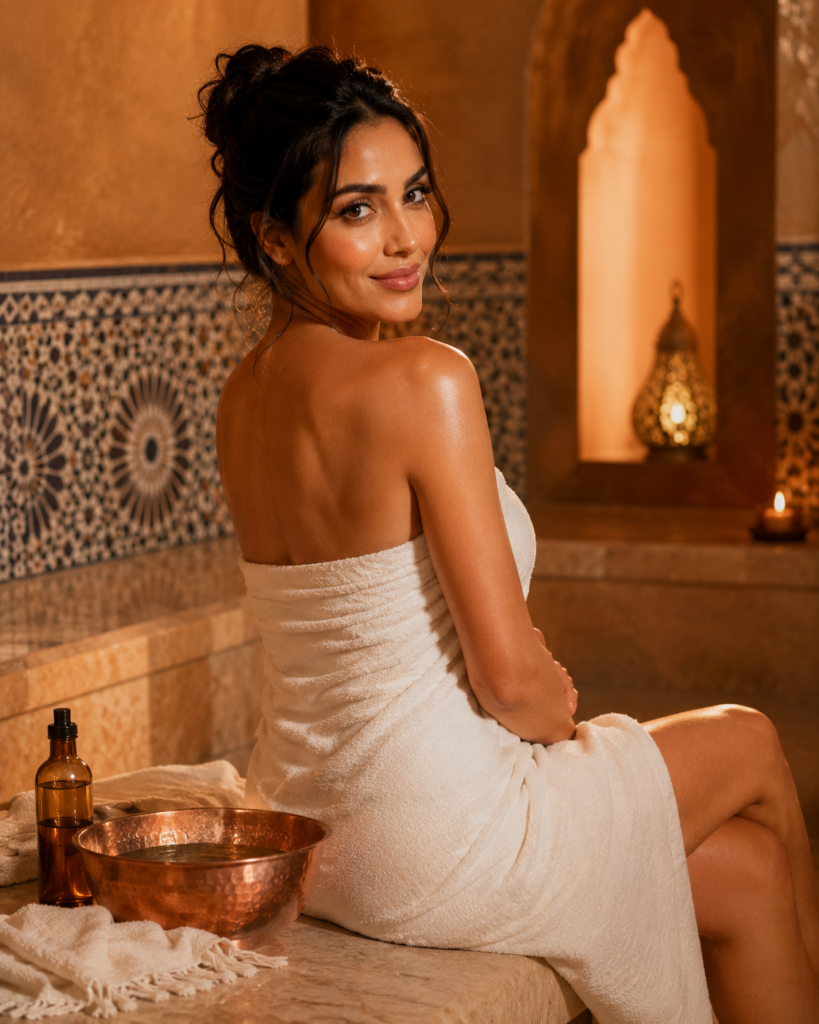
What the Experience Is Like
The session begins with warmth. Not aggressive heat — the kind that settles into the muscles and joints and begins to slow everything down.
The black soap application is generous. It’s worked into the skin in slow, deliberate movements. There’s time for it to penetrate. Nothing is rushed.
The kessa exfoliation is the most visceral part. The kessa mitt has a texture that’s more purposeful than anything used in standard body treatments. The dead skin it removes is visible — which sounds unpleasant and actually produces a specific kind of satisfaction. You can see what was there. You understand why the skin felt the way it did.
The ghassoul clay is cool against freshly exfoliated skin. As it dries and is removed, the skin underneath feels tighter — not uncomfortable, just more defined. More itself.
The argan oil finish is the closing chapter. Warm, unhurried, the oil worked into skin that’s genuinely ready to receive it. The skin absorbs it differently than it would on any other day.
By the time the session ends, the skin isn’t just clean. It’s been through something complete.
What Clients Say About the Pampering Standard
Sreethi described what it feels like when a service goes beyond the treatment itself:
“Just loved how my nail turned out… Zahrah you did a fab job. Would recommend to get your nails done by this salon and from Zahrah. They pamper you with drinks of your choice and chocolates too. What else does a girl need?”
“What else does a girl need?” That question, asked honestly, is the standard a luxury service should aim for. Not just technically excellent — complete. Everything accounted for. Nothing missing.
Jasmin N noticed the same quality from first contact:
“I had the best experience here. Their WA response is so fast, the salon is beautiful, they have a drink menu — you feel so pampered — and Hayma is so amazing at her craft. She’s such a sweet girl as well, and I love my nails.”
The environment, the welcome, the attention — all of it before the treatment even begins. A Moroccan bath at the right salon isn’t just a body treatment. It’s an hour where every detail has been considered. That combination of physical result and genuine care is what makes it the kind of appointment women return to every month rather than occasionally.
How Often — And What to Do After
Monthly is the ideal frequency for most women in Dubai.
The skin’s natural cell turnover cycle takes approximately 28 days. A monthly hammam aligns with this cycle — removing what’s accumulated over a full turnover period and resetting the skin’s surface just as the next cycle begins. In Dubai’s environment, with its consistent UV, hard water, and air conditioning exposure, monthly timing is what maintains the result rather than simply producing it once.
For women preparing for a specific event, one hammam three to five days before the date allows any minor redness to settle and lets the argan oil hydration fully absorb before the occasion.
After your session:
No exfoliation for 48 hours. The skin has been thoroughly exfoliated — layering another exfoliant on top in the days immediately following causes sensitivity rather than additional benefit.
Keep the skin hydrated. A lightweight, fragrance-free moisturizer applied morning and evening in the days after a hammam maintains what the argan oil began.
SPF every day. Freshly exfoliated skin is more photosensitive than skin with its dead cell layer intact. In Dubai’s UV environment, sun protection in the days following a hammam is particularly important.
Drink water before and after. The heat and perspiration involved in a hammam are dehydrating from the inside — hydration supports what the treatment does to the outside.
Related: How Often Should You Really Visit a Salon?
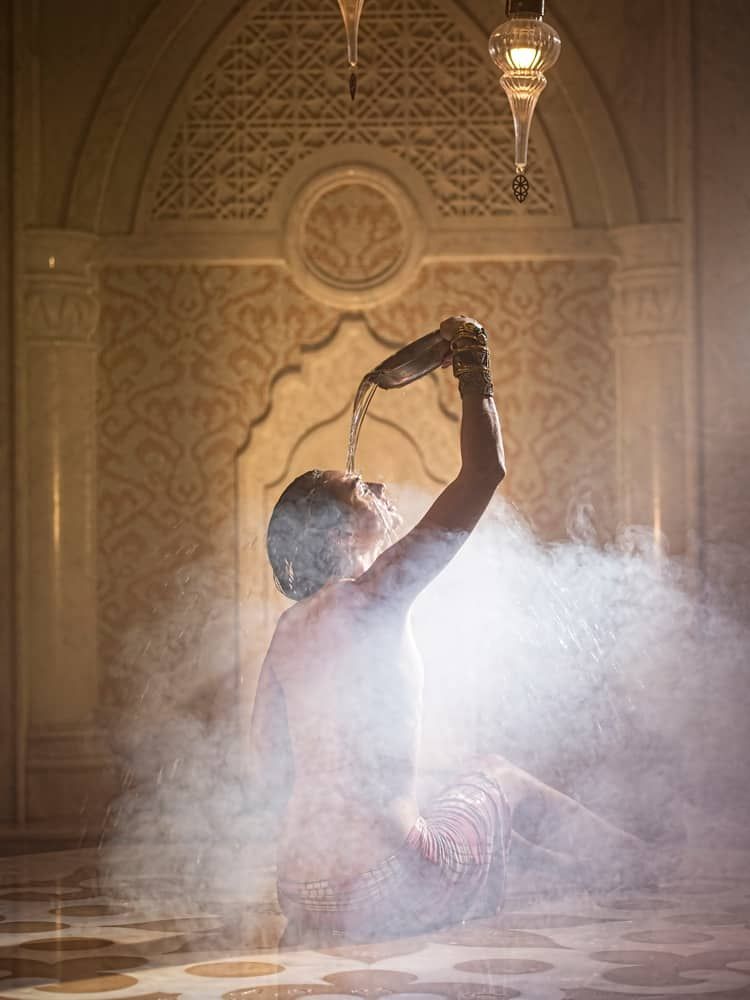
The Professional Standard in Dubai
Body treatments in Dubai — including the Moroccan bath — fall under the regulatory framework of the Dubai Health Authority. Practitioners at DHA-certified facilities are assessed to a verified professional standard. You can check DHA licensing requirements directly at dha.gov.ae.
For a hammam specifically, the quality of the products used matters significantly to the result. Authentic Moroccan black soap — made from olive oil and macerated olives — performs differently from a product that replicates the name without the formulation. Genuine ghassoul clay from the Atlas Mountains has a mineral composition that generic clay masks don’t replicate. The difference is noticeable in how the skin feels during the treatment and how it looks afterward.
At Elaris, natural and vegan formulations are prioritized wherever quality allows — which for Moroccan bath services means using authentic, properly sourced ingredients throughout the ritual rather than substituting for convenience.
The Monthly Reset Your Skin Has Been Waiting For
There’s a specific moment in a Moroccan bath when the skin reveals itself.
The kessa mitt has done its work. The dead layer is gone. The skin underneath is smoother than anything a daily routine produces. Warmer. More alive.
That moment isn’t dramatic. It’s quiet. Just your skin, functioning the way it should, without the accumulation of everything Dubai’s environment has been depositing on it for the past month.
That’s what a monthly hammam gives you. Not a one-off transformation. A consistent rhythm of skin that stays at its best — clearer, more even, more hydrated, more responsive to everything else you do for it.
Elaris offers Moroccan bath services across four locations in Dubai — Business Bay, Jumeirah 1, Jumeirah 3, and The Village Mall. DHA-certified specialists. Authentic formulations where quality matters most. The same standard of care applied to a full-body treatment that’s applied to every other service at the salon.
4.8 stars on Google from over 300 reviews. 4.8 on Fresha from over 200 more. Because the standard doesn’t change depending on which service you’ve booked.
If you’ve never had a Moroccan bath — or if you’ve had one that didn’t quite deliver what you’d hoped — a consultation is the right place to start.
Book your Moroccan bath on WhatsApp →
Frequently Asked Questions
What is a Moroccan bath and what does it involve?
A Moroccan bath — also called a hammam — is a traditional full-body cleansing ritual involving four stages: steam to open the pores and soften the skin, Moroccan black soap applied and left to penetrate, deep exfoliation using a kessa mitt to remove dead skin, and a finish with ghassoul clay and argan oil to nourish and seal moisture into freshly exposed skin. The full session takes approximately 45–60 minutes and produces a skin result that most women describe as unlike anything achievable with standard body treatments.
What are the benefits of a Moroccan bath for skin?
The primary benefits are deep exfoliation, improved skin texture, enhanced hydration, and better light reflection — the “glow” effect women consistently report. The steam phase opens pores and improves circulation. The black soap softens dead skin buildup for a more complete removal. The kessa exfoliation removes the stratum corneum and triggers cell turnover. The ghassoul clay draws out impurities. The argan oil finish penetrates more deeply than it would on unprepared skin. Together these stages produce a skin reset that goes significantly deeper than a standard body scrub.
How often should I get a Moroccan bath in Dubai?
Monthly is the most effective frequency for most women in Dubai. The combination of hard water mineral buildup, high UV exposure, and air conditioning creates ongoing skin stress that accumulates over approximately a month. A monthly hammam removes this accumulation, resets the skin’s surface, and supports the skin barrier — maintaining the result rather than simply producing it once. For specific occasions, booking three to five days before the event gives the skin time to settle and the argan oil time to fully absorb.
Is a Moroccan bath suitable for sensitive skin?
With appropriate adjustments, yes. The key variables are the steam temperature, the pressure used during kessa exfoliation, and the products chosen. A properly trained specialist will assess your skin’s sensitivity before starting and adjust accordingly — lighter steam, gentler exfoliation pressure, fragrance-free product alternatives if needed. Communicate your sensitivity clearly at the consultation before the session begins.
What is the difference between a Moroccan bath and a Turkish bath?
Both use moist heat but differ in temperature, products, and process. A Turkish bath (hammam) uses higher steam temperatures and focuses primarily on heat therapy. The Moroccan bath uses moderate moist heat combined with a specific four-step product sequence — black soap, kessa exfoliation, ghassoul clay, and argan oil — that makes it a comprehensive skin treatment rather than primarily a heat therapy. The Moroccan bath’s exfoliation depth and skin-specific product sequence are what distinguish its results.
What should I wear to a Moroccan bath appointment?
Your therapist will provide guidance on what to wear during the treatment — typically disposable underwear is provided. You don’t need to bring anything specific. Wear comfortable, loose clothing to your appointment and avoid tight waistbands or anything that might irritate freshly exfoliated skin afterward. Bring or wear SPF for after the session, particularly if you’ll be going outdoors in Dubai’s sun.